

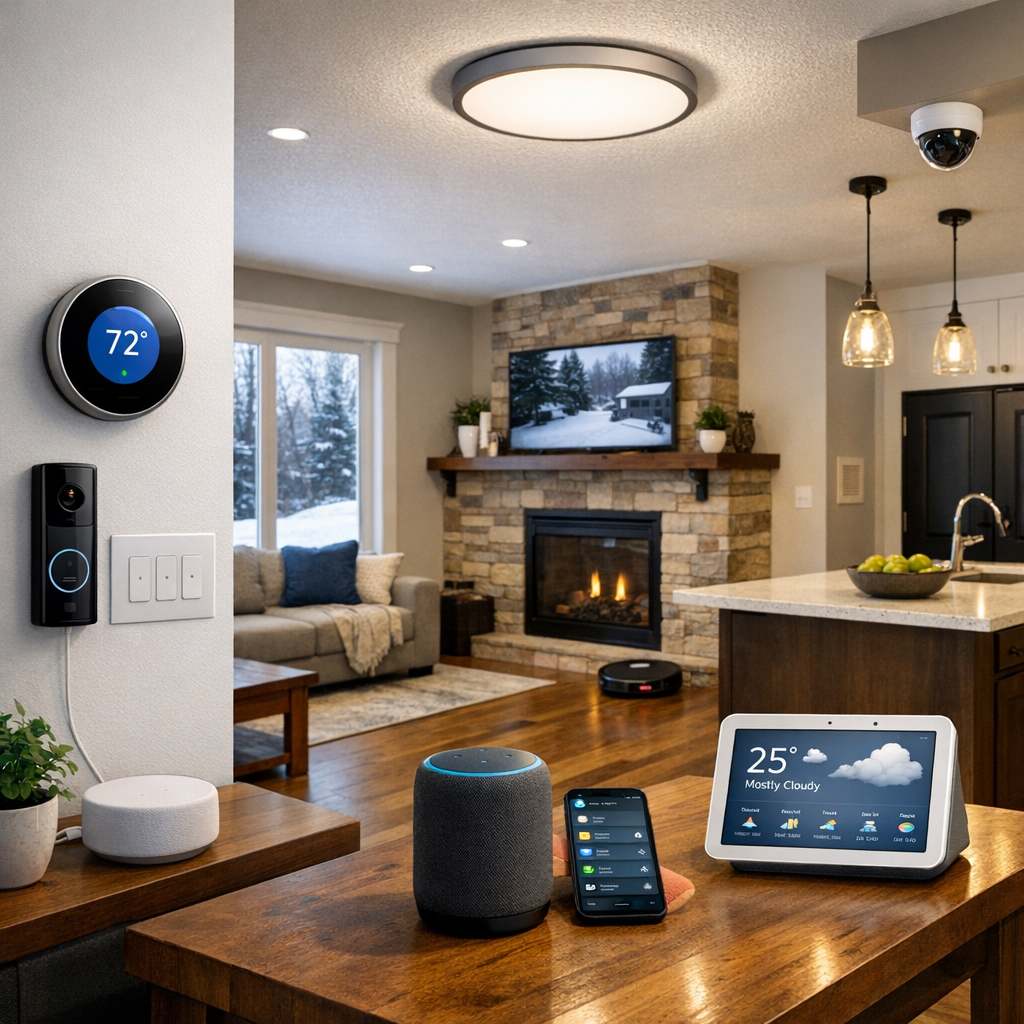
In Champlin today, smart gadgets and AI-powered devices are no longer futuristic—they’re tools many homes rely on to save energy, improve comfort, and make daily tasks easier. But what really happens when you say, “Hey Google…” or let your thermostat learn when you’re home?
What Makes “Smart” Devices Truly Smart
At the heart of modern AI gadgets are few core elements: sensors to detect movement, temperature, light or sound; connectivity to send data; a microprocessor or neural chip to interpret that data; and actuators to carry out actions. Devices like smart thermostats, security cameras, and lighting systems combine these to observe routines and adapt without explicit commands.
On-device vs. Cloud Processing
Many AI features happen right in your home on embedded chips—this is what lets devices respond instantly, work offline, and shield sensitive data. Meanwhile, cloud processing powers more demanding tasks like complex reasoning or cross-device coordination. The best systems use a mix, tailored to what you need and what kind of privacy you expect.
Real-life Benefits You Notice Every Day
- Comfort that adapts: Your thermostat learns when you’re typically gone, dim lights follow your evening routine, and devices make small adjustments that add up.
- Energy savings: Smart AI systems can reduce waste—heat down when no one is home, lighting off in unused rooms, air quality monitored for healthier air without over-ventilation.
- Security & convenience: Advanced cameras distinguish people from pets, voice assistants let you control devices with words, and alerts help you stay aware even when you’re away.
Trade-offs: What to Keep in Mind
No tech is perfect. Here are common concerns homeowners should weigh:
- Privacy: AI devices collect personal data. Whether processing happens locally or in cloud servers affects what’s shared—and who sees it.
- Complexity and compatibility: Mixing brands and protocols (Wi-Fi, Zigbee, Thread, Matter) can lead to glitches unless you plan ahead.
- Real AI vs. clever marketing: Some products tag “AI” to features like voice command or scheduling—which are helpful, but not the same as true adaptive learning.
Making Smart Choices for Your Champlin Home
If you’re considering AI tech upgrades, here’s how to get them right:
- Start with your priorities—energy bills, security, convenience—and choose the features that align.
- Look for devices certified to work together (Matter-standard is a good bet) to avoid compatibility headaches.
- Check where data is stored and processed. If local processing is important to you, focus on devices with on-device AI capabilities.
- Don’t expect perfection overnight—adaptive systems take time to learn routines. Patience pays off.
Ultimately, AI and smart home gadgets are helping turn Champlin homes into spaces that respond rather than just react. When chosen wisely, they don’t just add gadgets—they enhance daily life.